


It’s cold again, just like that. The middle schooler in my house refuses to wear a coat when it’s 23* outside, and I am the quintessential mother, nagging and pleading and threatening. I tell myself it’s for his own good, but really, it’s about not wanting the teachers at school drop-off to judge my mothering/negotiation skills. We tell ourselves stories to get by, don’t we?
Somehow, it is December already, and I have everything I’ve always wanted and more than I could have even asked for. And yet, there is a pang in my heart on this cold morning. There is a longing for something…something beyond what I can put words to. Not new, or better, or shiner, but something more real. Something lasting. Something that is so deeply pure, so thoroughly right, that it will never disappoint but always make good. Yesterday, as I walked down the hill in the bitter cold, I witnessed a sky so dense with clouds of deep, rich purples and blues, highlighted from behind with a blazing golden white, that I wanted to scoop it up with a giant spoon and swallow it all. Sometimes, I find myself stunned, and I pause long enough to be hungry for the glory.
My appetite for the eternal has certainly been stirred lately by what I am reading, and more specifically, by a story just completed titled Sir Gibbie. I mentioned this 1879 novel by George MacDonald in my last newsletter and highly recommend it to fellow lovers of MacDonald’s works. Just as a preface note, if you are new to MacDonald and not sure where to start, please reply to this email, and I can recommend a couple of shorter reads (this one tops out at 400+ pages on an e-reader and 500+ pages of a print version with translations included) as an introduction.
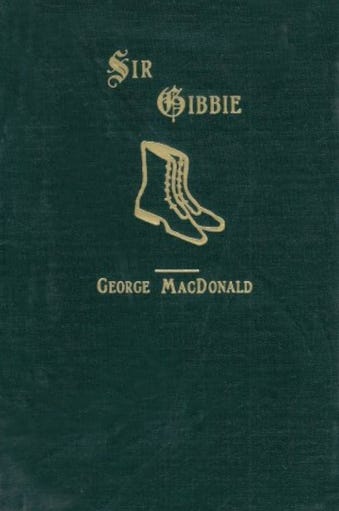
I’m almost at a loss for how to describe this book; it might be the only novel that I’ve ever read that made me feel like I was worshipping as I was reading. What does that mean? Well, Sir Gibbie is a historical fiction narrative in the sense that you follow the story of a mute (and eventually orphaned) boy named Gibbie and go along the journey of his life–all of the highs and lows of it–as he is coming of age. But that description is too simple, really. MacDonald does the near impossible by writing a character in wee Gibbie, the boy who lives in the dust of the world and who runs on mountaintops like a deer, who is so pure and good -who epitomizes goodness so thoroughly- and is deeply compelling (and no way cheesy…like I said, impossible), that I get the sense of having spent time with the Lord Jesus himself. The story comes close to an allegory yet resists the definitiveness of the category, and still, as I read of Gibbie’s loss (and brutal persecution, at times) in the valley of his small farming town and great gain as he travels to the heights of Janet Grant’s home on the mountain (and to a conscious knowledge of Christ), I’m all the time gathering food for my own soul, little revelations here and there to savor on later. There is a magic to this book—as G.K. Chesterton alluded, it is a fairy tale disguised as a novel.
Which begs the question for this writer: how did MacDonald write such stories?
In his essay, “The Fantastic Imagination” (1893), MacDonald explores the concept of meaning in fairytales and the centrality of God’s law in storytelling. If I understand him at all, I have grasped this point: for a creative endeavor to be true and beautiful it must have its origin in life, and the products of the life of God will be rightly oriented to receive an inheritance of meaning. The “vitality” of a story is in direct proportion to truth insofar as any aspect that sparkles with mystery or depth or stirs my heart to ask good, deep questions does so because of its orientation with God’s creative and moral order of the world, and to God himself. This doesn’t necessarily mean that every creative endeavor has to be allegorical or that a Christian artist will produce every great work of art. Indeed, some of what is called “Christian art” is the cringe-y-est, worst version of a poor 1-for-1 presentation of image-to-meaning. But it might mean that any truly bad work of art will lack that vitality and be disconnected from God as the wellspring of creativity, beauty, and order.
For storytelling, artmaking, or whatever the creative medium, to be transcendent, the effort must be reaching for something greater and outside of ourselves, and art that can be called ‘good’ in all honesty will have that divine spark of the eternal. MacDonald makes the point by saying, “One difference between God’s work and man’s is, that, while God’s work cannot mean more than he meant, man’s must mean more than he meant.”
Yes, we are limited in our expression because we are human, and all creative expressions of art are naturally confined to our mediums of choice. But perhaps this is why our artmaking tends to focus on one specific element, or angle, to reveal the glory of the whole–we cannot, in our humanness, actually create ex nihilo, but we can hyper-focus on something wonderful, some part of the natural world or our experience in it, and expand the specific bit and allow the iteration to echo of the original inspirational thing. We, ourselves, may even have a strange, out-of-body experience of finding further inspiration or insight from some work of our own hands, for in the process, we were “dealing all the time with things that came from thoughts beyond [our] own.”
The act of creating is, therefore, relationally dependent on the Holy Spirit to do what the Spirit does, to communicate the presence of Christ to us in our everyday life so that we can receive, adore, and participate in further expressions of his glory. The meaning is inherently there because we are receiving a taste from the original cup and, in one fluid turn, translating the flavor to whatever story or song or work of beauty and truth we’ve put our hand to. In our creative pursuits, we are invited to become both childlike, playing at the Father’s knee with delight, and mature sons, ready to receive and steward the divine inheritance faithfully. Like Gibbie tending his sheep on the mountainside with a full vision of the Son of Man in his heart, so much so that the Lord himself was there feeding and guiding the lambs alongside him, MacDonald prophetically exhorts us, “If he be a true man, he will imagine true things…”
The distinction should be made between imagination and fancy, as MacDonald sees it: imagination is the freedom to “call up” new forms within our art that do not go against the order of God’s world (e.g., calling something evil ‘good’ or vice versa) but is harmonious with the original design of things, while fancy is more akin to a superfluous tweak of detail. The artist who dwells within the world that God created, who delights in the divine design, who seeks to know the heart of God and to say the continual “yes” to his invitation, will have access to an endless paintbox of color to notice, enjoy, and recreate new forms and shades. If, however, an artist rejects the fingerprint of God on himself or the world, what kind of essence will be communicated in his media? In other words, we have the creative liberty to play with the material world in artmaking; it is the immaterial, the eternal law of God, that we must first come in agreement with and humbly submit to the proper created order.
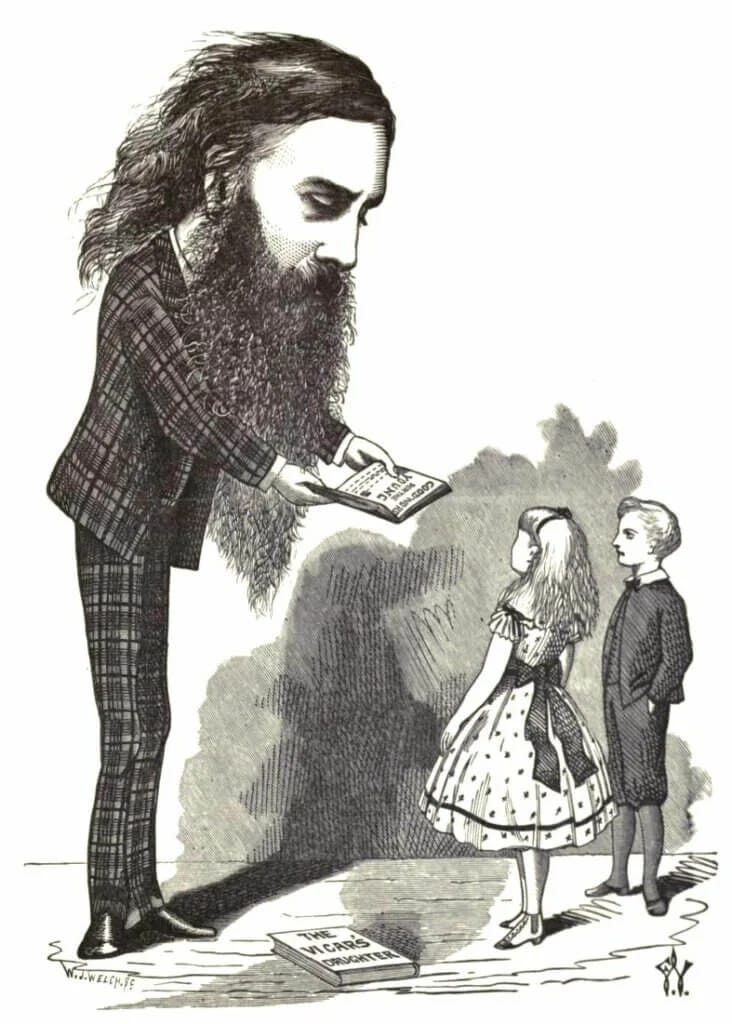
Here, MacDonald instructs on the relationship between beauty and law, fancy and imagination:
“Law is the soil in which alone beauty will grow; beauty is the only stuff in which Truth can be clothed; and you may, if you will, call Imagination the tailor that cuts her garments to fit her, and Fancy his journeyman that puts the pieces of them together, or perhaps at most embroiders their button-holes.”
As a crude example, I might imagine a cinematic scene featuring a Great Blue Heron that glides along the glassy surface of a pond, and as he dips his long beak into the water, in one smooth movement, he procures a shining golden key, eventually to be transferred to my story’s protagonist (where it will be used on the heroic journey, of course). If, when the heron gives my protagonist the key, he speaks an audible language that the hero understands, this is a simple product of fancy; on the other hand, if the great bird instructs the hero to reject courage and follow the coward’s path, and this is represented as good instruction, this would break the law of imagination. Or, more succinctly, if the heron approaches a young maiden in my story and she is encouraged to choose her own path to become a prince or princess, each presented as equal in moral value, this would be a rejection of the ordered good and read as absurd. “Obeying laws,” MacDonald says, “the maker works like his creator; not obeying law, he is such a fool as heaps a pile of stones and calls it a church…the laws of the spirit of man must hold, alike in this world and in any world he may invent.” When dealing in truth and imagination, one must become antagonistic to the materialist view to be able to expose the dull pyrite as a counterfeit. For those with eyes to see, there are jewels of meaning to be found everywhere.
“But what if all of this Christian law-talk stifles my creative abilities as an artist?”
Do not fear, dear storymaker, songwriter, beautifier of the world–in the embracing of God’s law and the upward alignment of the heart, a floodgate of treasure will open. It is wee Sir Gibbie who shows us this plainly. After all manner of trial and grief, Gibbie is welcomed into a humble cottage on the side of a high mountain, and there, ‘up Daurside,’ he hears the gospel of the New Testament from Janet Grant, whose own obedience of her Lord Jesus is as earnest and steadfast as the rising morning sun. As she ministers to his hunger, weariness, and wounds, Janet’s simple faith, stripped of any theological scaffoldings, communicates Christ to Gibbie, which results in the boy’s easy and willing deference to the Lord.
“For obedience alone holds wide the door for the entrance of the spirit of wisdom…from the moment when, yet a mere child, [Gibbie] heard there was such a one claiming his obedience, he began to turn to him the hearing ear, the willing heart, the ready hand. The main thing which rendered this devotion more easy and natural to him than to others was, that, more than in most, the love of man had in him prepared the way of the Lord. He who so loved the sons of men was ready to love the Son of Man the moment he heard of him; love makes obedience a joy; and of him who obeys, all heaven is the patrimony–he is fellow-heir with Christ.” (Sir Gibbie, p 249)
The challenges of Gibbie’s life would have hardened many hearts against the search for the origin of that vitality, the wellspring of life, and it may be true that some of us have all but given up the search. Yet, there is something so perfectly oriented in the character of Gibbie that it draws the vision of the heart upward and propels the story forward. This is what good stories do–they transform us. We can’t help but be changed after the reading. And MacDonald's ministration to us aids the process because, through the fairytale quality of Sir Gibbie, he is giving us the gospel from page one.
Gibbie’s all-consuming hope is a simple one: to receive and know the love of the heavenly Father who made him and knows him and to express this love by any humble or extravagant means in return—offered to all, without prejudice, his is an inheritance of God’s all-consuming, all-renewing love; a love which orders all truth, beauty, and goodness of this world and beyond. This kind of treasure is revealed in a lost earring, the pearl of great price, notably found only by going down in the low places of a sewer.
The fairytale story of Sir Gibbie is more than a pauper-to-prince rise in station, because his inheritance is not merely one of legal means, but one found in the wind and rain and lightning of a mighty storm, in the faces of rough Mistress Croale and tender Ginevra, in the poems of Donal’s books, and in the enduring testimonies of Matthew, Mark, Luke, and John. And in a moment, through the words of this novel, I have the eyes of a child and I can see: all of it, bursting with meaning, standing proudly and representing a truer and eternal Reality, which is offered to each of us and found in the person of Jesus Christ—who is before all things, and in whom all things hold together.
There was a death in our community a few days ago. Tragedy pays no attention to the calendar. I didn’t know him, but I know his son, his very young son. And my heart is grieving for this boy, who will not have an earthly father for the rest of his days. Who will look this child in the eyes and tell him there is a hope that will never disappoint? Who will tell him of a perfect Father, who put on flesh and became a boy, who felt joy and sorrow, just like him?
Still, there is joy to be found–new calves dot the hill behind our house, fuzzy black younglings, and I can hear their baying throughout the day. I love to see the babies chase their slowly meandering mothers, their short little legs trying to keep up as she searches for a peaceful place to graze. More treasures of joy to receive through nourishing meals with new friends and old, sparkling lights dotting the old town square, candy-cane-colorful wrapping paper (and ribbons aplenty), and children singing their hearts out to their glowing parents. A rich inheritance has been supplied for us, if we have the courage to pursue it as boldly as a boy chasing a storm.
After all, it was Dickins himself who mused,
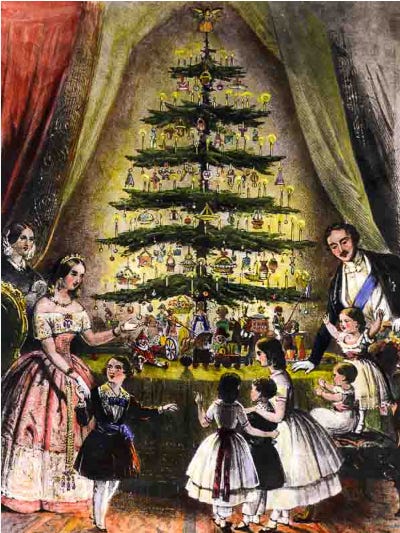
“…for it is good to be children sometimes, and never better than at Christmas, when its mighty Founder was a child himself.”
If I don’t see you before then, Merry Christmas to you and yours!
Until next time,
SBL
I recall enjoying The Princess and the Goblin and The Princess and Curdie when I read them aloud to some of my kids years ago. I really want to read Sir Gibbie. My therapist said it was a favorite childhood book of hers, and knowing my taste in literature, has recommended it to me.
Excellent essay!
Beautiful! I’m glad I still have MacDonald’s novels to read for the first time. I just got a copy of “Robert Falconer” that I’m excited to read in 2025!